
Can I claim it on tax? A guide to common WFH expenses
Some home-working costs can qualify for an Australian employee deduction; others are private, already included in a method, or need to be claimed over time. Start with the expense below, then check who paid, how it was used and what evidence you have.
General information for Australian employees. Official sources checked 6 September 2026. Check the rules for your claim year and ask a registered tax agent where your circumstances need individual advice.
Choose the expense you are checking
- Electricity and gas: additional work use, the fixed rate and actual energy costs.
- Internet: shared household use, bundled plans and avoiding a second claim.
- Office furniture: desks and chairs, private use and asset treatment.
- Monitors: work screens, gaming use and multiple identical purchases.
- AirPods and headphones: work calls, private listening and the evidence needed.
- Phones: the handset is a different expense from the mobile plan.
- Laptops: work-use percentages, asset cost and why $300 is not a blanket allowance.
- University courses: current employment, full-fee places and HELP distinctions.
- Health insurance: a private cost, with separate rebate rules.
Three different questions behind “can I claim?”
Eligibility: does the expense relate to earning your employment income, and did you pay it without reimbursement? Amount: what is the work share, and which calculation method applies? Evidence: what supports both the purchase and the calculation? A receipt alone does not answer all three. ATO: working-from-home eligibility.
The WFH fixed rate includes energy, internet, phone usage, stationery and computer consumables. Eligible equipment costs can be considered separately under the asset rules. Under actual costs, calculate and support the additional work-related share of each expense. ATO: what the fixed rate includes; ATO: actual costs.
Turn a purchase into an organised review record
In The Paper Keep, save the original receipt, check the extracted items, and choose a category such as Home internet or Equipment for review. Add line-item tags such as wfh, private-use-review or depreciation-review. Put your work-purpose explanation and the location of supporting usage records in the receipt notes.
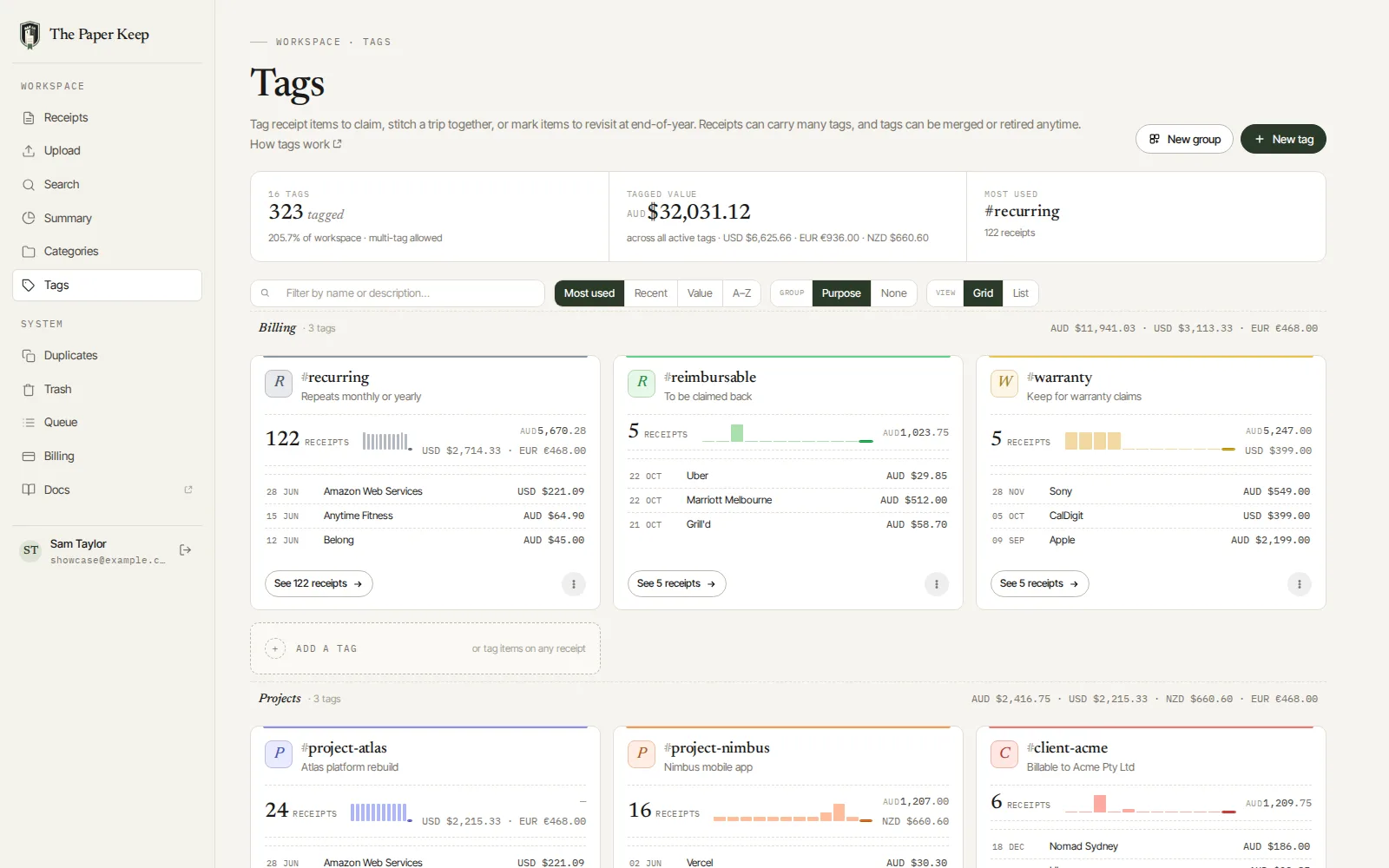
Leave the Tax deductible flag off on review categories until treatment is resolved. A tag does not reduce a receipt total, remove a reimbursement or calculate depreciation. The category-based deductible summary adds whole receipts; its CSV exports one row per receipt with categories, tag names and notes.
Use estimates for the right job
The Australian WFH estimator compares fixed-rate and actual-cost figures using your hours pattern, supported percentages, mapped AUD bills and work assets. It does not measure appliance electricity use, log work sessions or calculate an entire tax return. Your actual hours and usage evidence remain separate records.
The published fixed rate checked for these guides is 70 cents for 2025/26. Do not assume that rate for a later year; treat future-year results as provisional until the relevant guidance is confirmed. The actual-cost model also cannot choose a defensible percentage for you. ATO: rates and records.
Other household costs
Ordinary groceries and coffee are private. Rent, mortgage interest and other occupancy costs are generally unavailable to employees working at home, with limited exceptions that need a separate review. Equipment for a child’s schooling is not your work expense. ATO: expenses you cannot claim.
For a checklist based on your duties, see the occupation guides. Start collecting this year’s bills now, so the next tax season begins with evidence rather than an inbox search.
Make next tax time easier.
Keep your originals, organise expenses with categories and item tags, and review the year in one place. Use the WFH estimator when it applies, then export your receipt records for tax-time review.
Start a 14-day free trial. No credit card required.
When you're ready to do this in The Paper Keep, these are the click-by-click pages.